Thursday, January 5, 2012

The Ever-Widening Wealth Gap

Share this ARTICLE with your colleagues on LinkedIn .


"If the peasants are crying because they haven't any bread, then let them eat cake." This is a loosely translated quotation from some plutocratic, indifferent, callous, out-of-touch-with-the-common-serf, and likely French woman of great stature who should have shut up before she ultimately lost her head. Statements like the previous are almost as offensive as Leona Helmsley's  infamous "Taxes are for the little people."

The perception of the pampered, rich and powerful (can't you feel my envy?), who live in a certain isolation from the trials and tribulations of the wage-earning or unemployed crowd (the masses), is quite different than that of their poorer counterparts and, in the case of politics, constituents. There are very few truly wealthy people in the world, and they are vastly outnumbered by the struggling peasants who aspire to what amounts to at least a reasonable standard of living.

The disparity in wealth and income which separates these two groups is increasing rapidly, and dramatically. The social configuration is inefficient in terms of "government by the consent of the governed," or "government representing the interests of citizenry." This is because those who attain high political office and become part of the ruling class are so much wealthier than those who elect them that they cannot possibly empathize with the issues of the voters...the unrepresented majority.

This is happening all over the world. The United States is only one example.

To bring this difference in perception into clearer focus, when a Fortune 100 Director says he's struggling to get by, he might be saying it in a fine restaurant over cocktails while his chauffeur awaits, patiently parked at the curb. Or he might complain about it at the country club or at an executive retreat. When a commoner (as I am) says I am broke, he literally is on the verge of having his home foreclosed, clunky car repossessed, and has less than $4.75 in his jeans pocket. He is truly immobilized and worried to an extent which those elected officials, sheltered as they are on Mount Olympus, cannot remotely understand or relate to.

This makes for government of the increasingly growing population of poor folks by bodies comprised of wealthy, ideologically removed, wealthy folks. They cannot represent the interests of people to whom they cannot hope to relate!

An interesting article extract follows for your review. After you've taken a good read through it, take a look at my conclusions for THE GLOBAL FUTURIST.
---------------

The Wealth Gap Between Congress and Voters Is Growing


Both The New York Times and The Washington Post have separate reports today about the widening wealth gap between members of Congress and the people they represent. Almost half of all Congresspeople are millionaires and their median net worth has climbed to $913,000, compared to $100,000 for the rest of America households. 

According to the Post, that number drops to $725,000 when excluding home equity (and adjusting for inflation), but the same median figure for American families is just $20,500. And that gap has only grown wider in recent years.
Related: GOP Congressman Scraping By on Only $400,000 After Taxes

The biggest reason for the disparity is the sheer cost of running for office, which is both a full-time job and an expensive undertaking. The average successful House race costs $1.4 million to stage (the average Senate campaign is almost $10 million), and candidates are allowed — and often need — to donate as much as they want to their own effort. 

The costs of advertising and travel make it increasingly difficult for anyone who doesn't already have money to get their name out there. There have also been concerns raised recently about the ability of politicians to profit from their position, both through contacts made and the ability to trade stock based on privileged information.
Related: The Net Worth of Congress Rose 23.6% Since 2008

Even putting aside the questions of influence and corruption, the biggest concern is that those who elected to Congress are more out of touch with the world of their constituents than ever before. How can they be expected to look out for the interest of citizens when the biggest issues facing them — unemployment, health care, wages — are unknown to most of those who are supposed to be looking out for them? Or worse when addressing those issues directly contradicts their own interest, as when millionaires are asked to vote on a "millionaire's tax"? The biggest political movement of the last year, Occupy Wall Street, has been devoted almost exclusively to addressing the gap between rich and poor, but it's hard to see how any change becomes possible when that gap is greatest among those in a position to do something about it.
---------------


I am predicting:

1) An increasing number of one-term politicians, and increasing legislative turnover;

2) Increasing protests and acts of rebellion (i.e., "Occupy Wall Street") on the part of the citizenry against any person or institution which represents wealth and power;

3) Increasing pressure on investigative journalists prosecutors and judges worldwide to bring investigate, isolate and punish (i.e., make examples of) many of the world's rich and powerful, rendering this latter group somewhat paranoic for the first time since the Middle Ages;

4) An exodus of the powerful from public life to private puppeteering and market manipulation;

5) Ordinary envy turning to heightened animosity, acts of rebellion, and citizen activism.

I foresee dramatic upheaval in the composition and privileges of elected officials and government in general during these next five years. In defense, I would also expect to see many politicos finding new nesting places in the military-industrial complex, where they will continue to rule, but with a great deal less transparency, and with increased power.

While the rich will always win, I envision wild, extremist political battles, and the shift into the private sector of those who are old hands at being part of the governmental elite. This could portend a new brand of medieval feudalism surfacing as the new form of government.

"Let them eat cake?" Not one of the answer choices.


Douglas E. Castle


Blogs And RSS Feeds
by Douglas E Castle


Share this page

Wednesday, December 28, 2011

5 Giant Industry And Techno-Trends: The Global Futurist

Share this ARTICLE with your colleagues on LinkedIn .


Drawing from a variety of sources during the course of these past four weeks, I've distilled the information I've gathered regarding major trends (industries and technologies) down to my favorite five, each of which which I believe is going to be booming during the next five years, and each of which warrants careful observation, as well as some business and investment planning. But, of course, I do not offer any investment, financial, legal, health or tax advice.

One thing that all of these giant industry and technological trends have in common is that they are each already significantly underway. They are all gaining momentum. Quickly.
---------------

1. Nanotechnology, Nanotubes And Cardiovascular Pipecleaning.

Big Think Daily Ideafeed 15 October 2011
BIOTECH REVOLUTION
Microscopic Robots in Your Bloodstream
Engineers have used carbon nanotubes to create artificial muscle that moves like an elephant's trunk, which could be used to propel microscopic nanobots through the bloodstream.
READ NOW


2. Stem Cells, Computers and LIFE.

Researchers grow partial pituitary gland using stem cells

Japanese researchers used embryonic stem cells to grow partial pituitary glands, then transplanted the tissue in the kidneys of mice without pituitary glands. The transplanted tissue returned hormone levels to normal, according to the study published in Nature. The initiative is part of a worldwide effort to grow complete organs in a lab setting using stem cells. The Guardian (London) (12/4)...

And there's much more:

Bone_ss

What's the Latest Development? [From BigThink's Idea Newsletter] - Computer Printer-Assisted Bone Regrowth.


3D printers have been used to create bone-like material which researchers say could aid in repairing injuries. The new material would act like scaffolding, promoting the growth of new cells and then dissolve away with no ill-effects. Professor Susmita Bose, who helped carry out the work at Washington State University, has been at work on the material for four years. A breakthrough came recently when she found a way to double the strength of the main ceramic powder—calcium phosphate—by adding silica and zinc oxide.

What's the Big Idea?

Within just a few years, doctors could use the printing technique to custom-order replacement of bone tissue. "Tests carried on immature foetal bone cells in the laboratory found that new bone cells started growing over the scaffold within the first week of it being attached." Dr. Bose predicts that within a decade or two, doctors will be able use artificial bone from 3D printers as scaffolds, along with bone growth factors, to repair anything from a broken jaw to a broken spine.

Photo credit: shutterstock.com


3. Video Surveillance, Mobile Tracking and RFID
  • Malls use cellphone location data to track shoppers
    Malls in California and Virginia have begun using cellphone signals to track the locations of shoppers. The malls use the tools to triangulate shoppers' locations based on their cellphone signals as part of a trial that runs through the end of the year. Forest City, which owns the malls, says it is not collecting any data that could identify a shopper, though experts say the data could be paired with other sources of information to target offers. Some experts, however, have raised questions about the legality of such tracking. Ars Technica (11/26)


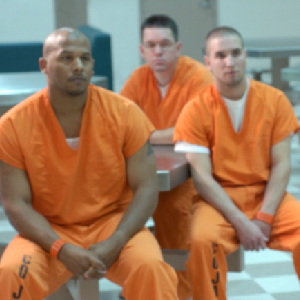
4. An Increase In The Number Of Prisons, Prisoners, Privatization Of Facilities, And Incarceration-Related Employment - Prisons Are One Of The Largest Domestic Growth Industries In The USA.

Prison Nation


December 21, 2011 by


Prison Nation
PHOTOS.COM
There are more than 2.3 million people in American prisons.
America has come to be more like North Korea than the America our fathers grew up in. The United States is not a country descending into totalitarianism. Totalitarianism, the police state, is here.

According to a recent study in the journal Pediatrics and reported in USAToday, one in three Americans will be arrested by the time they are 23. That’s up from 22 percent of youths that age 44 years ago.

Crimes leading to arrest in this age group range from truancy and vandalism to shoplifting and underage drinking to assault and murder. Criminologist Megan Kurlychek told the newspaper that localities handled many minor offenses more informally 40 years ago than they do now.

“Society is a lot less tolerant of these teenage behaviors,” she said.

In fact, it’s not just teenage behaviors society is not tolerating. Now elementary school children are charged with sexual assault over innocent hugs and kisses and assault when they get into fights on school grounds.

And with drug laws criminalizing possession of as little marijuana as a seed or stem, it’s easy to understand why there are more than 2.3 million people in American prisons.

According to a 2008 study by the Pew Center on the States, one in 100 Americans is behind bars. For blacks, the statistics are staggering. One in 15 black men aged 18 or older is behind bars. For blacks ages 20 to 34, the number is one in nine. Black women are three times more likely to be incarcerated than white women.

America’s rate of incarceration far outpaces countries like South Africa and Iran. For every 100,000 Americans, 750 are in jail. In Germany the rate is only 93 per 100,000.

In America, people can be fined and/or imprisoned for simply taking raw milk across State lines, selling “unapproved” rabbits, or uprooting a plant or draining a pond on their own property.

Now, Congress has passed and the President has signed legislation that designates America a battlefield in the War on Terror and subjects Americans to indefinite incarceration without a hearing.

Face it: America is now a prison Nation. And with America’s penchant for militarism and her people’s fondness of orators, Herr Hitler would feel right at home. ####
---------------
The profits and possibilities for companies in the building and management of prisons are promising. They'll be job opportunities for returning soldiers, retired law enforcement, and some local, but otherwise unskilled labor. And demand will continue to expand as the "Nation Of Regulation, Litigation And Incarceration" -- that's the United States...Land of the free/ Home of the brave -- continues to try to fuel a failing economy and an ever-increasing draconian system of punishment by A) locking up non-violent offenders and destroying families [leading to more crime] and B) giving non-productive jail-based jobs to anybody who is still outside of the prison (and is not an escapee) after the evening's lockdown.


5. Electroshock, Direct Computer-Brain Interaction And Virtual Reality To Enhance Learning Ability, Accompanied By A Renewed Interest In Subliminal Entrainment.

The following article excerpt appears courtesy of a slightly-dated but highly-relevant edition of BigThinks's Daily IdeaFeed. The article was every bit as stimulating (pun intended) as the slightly-Frakensteinian notion of using a highly-refined variant of electroconvulsive therapy (ECT), a controversial treatment for schizophrenia, catatonia, and some forms of severe clinical depression in order to stimulate and accelerate learning (the assimilation of knowledge) as well as recall (the ability to rapidly access the assimilated knowledge), and intelligence (the ability to use assimilated knowledge to identify and solve problems -- putting it simply):
BIOTECH REVOLUTION
Mild Electric Shocks Speed Learning
Running a mild electric current through the brain improves learning speed, according to Air Force researchers. The technique was used to teach personnel how to identify drone targets.
READ NOW
---------------
Don't throw away those binaural and subliminal CDs. Keep Your Headphones. Entrainment [the creation of thoughts and emotions by inducing brain wave patterns through external means] will indeed be making a comeback, with improved targeting and precise technology. It is interesting to note that the brain tends to "pick up the rhythm' to certain patterned beats and sounds through an amazing process of mimicry. Whether this is done with headphones or electrodes, the possibilities are exciting, if not just a bit frightening. The ultimate result would be similar to Neo's crash course in, and rapid mastery of various styles of martial arts by immersion in a computer-simulated and controlled environment. Virtual reality is going to be an increasing preoccupation. Whether for education or recreation, the temptation of alternative realms is far too exciting to stay put.


Douglas E. Castle for THE GLOBAL FUTURIST


Blogs And RSS Feeds
by Douglas E Castle


Share this page

Sunday, December 18, 2011

Bioenergetics - The Ultimate Power Source

Share this ARTICLE with your colleagues on LinkedIn .


Living organisms consume food (as fuel) and carry on with the various tasks of living. Each living creature is a consumer and creator of bioenergy. Plant and animal bioenergetics is being looked at very seriously as a potentially limitless source of power for virtually every conceivable use. The difference between input (food) and output (work) is the magical key.

The issues surrounding its inevitable development and deployment include:

1) Obtaining it efficiently;

2) Transporting (or 'conducting') it efficiently;

3) Storing it for future use with a minimal loss or decay factor;

4) Converting it from one form to another as may be required in the circumstances;

5) Multiplying its efficiency in terms of input versus output, and perpetuating the production cycle.

Regarding this latter issue, picture the example of trying to get a hamster to cycle a wheel to the greatest number of revolutions per minute while feeding it the least expensive source of nutrition.

If you combine living creatures which are highly energetic little machines (such as microbes or even viruses) which consume waste products or pollutants for the purpose harnessing a source of energy, several perplexing problems facing us in the present and in the future could theoretically be solved (or at least mitigated) simultaneously.

The utopian picture of bioenergetics would be harnessing energetic output to produce electricity from a species of microbes which consumes oil spills and excretes (as a byproduct of the energy production process) harmless waste products that are readily biodegradable, or perhaps even useful.

I strongly believe that enterprises which invest in bioenergetics in any aspect will begin to make an appearance late in 2012 (principally as academically-sponsored start-ups and ventures), and will be very valuable in terms of profit potential and stock pricing potential by the third quarter of 2015.

The following article excerpt comes to us courtesy of SmartPlanet:

Using everyday microbes to power electrical devices

A grad student is improving technology that creates electrical fuel cells from everyday microbes like yeast. Read the full story

This field is fashionably green, ecologically unassailable, and addresses an almost unimaginably enormous demand while simultaneously solving some very serious problems. It has the ancillary sociological benefit of bringing together a merger of interests between naturalists and preservationists with the lust for innovation and profits of entrepreneurs and capital providers. Perhaps some venture capitalists, accredited angel investors and crowdfunding organizers are listening.

I would certainly hope so.

Douglas E. Castle for The Global Futurist


Blogs And RSS Feeds
by Douglas E Castle


Share this page

Sunday, December 4, 2011

Trading Commercialization For Public Access: Crowdsourcing, Brainstorming, Collaboration

Share this ARTICLE with your colleagues on LinkedIn .


English: Front of white iPad 2.Image via Wikipedia - Apps and Icons


Crowdsourcing, Brainstorming And Collaboration: everyone seems to see the benefits to the populace as a whole when 'free' computer and mobile apps, 'open source' programs and software products are made available to the eager, ever-hungry public. The group-centered creative process is indisputably powerful -- its magic formula... limitless access to limitless numbers of limitless minds. The distribution process is hyper-efficient: all of the co-creators and their social circles will use, review and promote what's produced. Ultimately, word and utilization travel virally.

The social media and communications platforms benefiting (i.e., improving or increasing their respective use of their platforms; platforms and communications media like Twitter, Facebook, iPad, Blogger, Wordpress and others)  by this seemingly endless cloudburst of apps even help to encourage ["Developers? Work with our API to develop your ingenious new applications and integrated uses for our product! Work with our development team.), advertise and promote them.

Confession: The title of this article is slightly misleading. Apologies. My trend-watchers, predictors, market prognosticators and sophisticated business audience already know that the notion of "trading" commercialization for public access is actually ephemeral. Sooner or later, the endgame is invariable the harnessing of every application, innovation and invention for a profit. It's just a matter of "How?" and "When?" And after these are answered, the question is "Who will gain and who will turn (the customerization process) from a free-user to a monthly payer or subscriber?"

Skeptics ask two questions: "Who makes a profit?" and "How do they make it?" Take a glance at the following article excerpt, which is over a month old but incredibly applicable, and then please hit the "BACK" button on the upper left-hand corner of your browser and return. We'll wait for you.

From the BigThink Daily IdeaFeed:

FREE DOWNLOAD:
Crowdsourced And Free Navigation Apps Taking Off
New, free navigation apps with an emphasis on social features and crowdsourced data are providing competition for premium providers such as TomTom, Garmin, CoPilot and Navigon.


READ NOW

---------------
And now to the ever-irksome questions that are begging to be asked by business strategists, obsessive monetizers, dependent users and Global Futurists... and other persons who are considered by some to be skeptics and cynics, but whom I consider to be intelligent business pragmatists.

The process of monetization of these "open" and "free" source innovations is ongoing, but I believe that the timeframe from first release of new technology to monetization is going to be shrinking as a result of the weak global economy, the rise in the acceptability and utilization of cybercommerce, the increasing dependence on mobile devices for information and communication, and the growing population of people actively involved (either socially or commercially) in social media.

Ego gratification and the desire to share may initiate the creative processes, but real-world, real-time necessity accelerates the compulsion to convert from ego gratification and "psychic income" to creative conversion over to monetization.


WHO WILL PROFIT? AND HOW WILL THEY PROFIT?

1) Developers - Developers will be paid in the form of awards, contest prizes, promotion, and occasionally sales-based royalties from the benefitted platforms and media. If the developers have used open-sourcing, collaboration or crowd-sourcing they could, in theory pro-rate their benefits (both direct financial and endorsement-based) with their many collaborators as stakeholders. It is far more likely that the visionary organizers of these projects shall benefit directly and give 'thanks' to their contributors in the form of honorable mention. Exploiters often dominate and prevail. Others, less assertive merely settle for 'thanks,' laminated MVP certificates, bragging rights and other honorable discharges and trivial dismissal documents.

Some developers will be acquired, individually or corporately by the platform and media hosts in a "brain roundup" of talent and in marriages of political convenience -- i.e., to avoid IP legal battles and to avoid encouraging too much entrepreneurial independence. Picture a kinder, gentler Bill Gates, giving you a choice between a wonderful, glamorous career or an exsanguination. 

Other developers will remain independent and continue to offer a free version of their innovations, but will begin developing and offer a "premium" or "professional" upgraded version of their products and services for a small recurring fee to the users. Picture charging a growing population of adherents a very small nuisance tax that is just too inexpensive to be objectionable. Heck, my subscription to Pingler only costs me $5.00 per month. I couldn't live without it. To get the Widgetbox "Pro" membership costs me, on average, $1.99 per month -- while I don't use it much, I just can't be bothered to cancel it.


2) The Platform Hosts And Media Providers - These companies will be benefitted by an increased flood of user volume to their respective platforms and media due to the convenience and an increased us of these applications, from Sudoku, to GPS restaurant locators, to mobile apps to access and support all of your social media and messaging activity. Firstly, their revenues will be increased from advertisers and commercial users due to their decreasing CPM and ever-increasing social and business audience and influence. Advertisers and promoters will be paying more to these old pros -- rates will rise.

After advertisers and commercial users are more fully trussed up and dependent, these larger hosts and providers will go after consumers (picture Bank Of America, Netflix and your beloved utilities providers raising prices to end-users directly, but with less fanfare, and engendering less hatred or mass exodus threats). Of course, once consumers begin to get used to the idea of paying a "trivial" fee for what used to be free services, those fees will never, ever be reduced --- I would predict a high likelihood that they will be increased on a regular basis thereafter.


3) Collaborators, As Teams And Individual Members - As the participants in these large, currently nameless, faceless crowds become more sophisticated with time, experience and watching the success of the early-exploiters (my projected horizon for this awakening is over the course of three years, starting toward the end of the first quarter of 2012, and slowing down toward the end of the time horizon due a flooding of the marketplace with app litter, increased competition amongst these collaborative developer teams, i.e., bidding the price of the services down in accordance with the basic Law Of Supply And Demand), and the increased acceptance of software as a service with the expansion of the Cloud.

Incidentally, "The Cloud" still scares me. This is not only in terms of the dependency on yet a new set of utilities-like companies, but also due to the increased vulnerability to data theft, and the cost of downtime and defaults, and a feeling of the backups and modifications and parallel systems which will have to be deployed by companies which wish to mitigate and contain the risks involved in this "one-size-fits-all" type of solution. Also, The Cloud sounds ominously like the title of a B-grade science fiction movie or of a lesser Stephen King short story.

Douglas E. Castle for The Global Futurist
*****


Blogs And RSS Feeds
by Douglas E Castle


Share this page

Wednesday, November 9, 2011

Mandarin Madness: Self-Fulfilling Prophesy

Share this ARTICLE with your colleagues on LinkedIn .


As is the case in many trends and their ultimate outcomes, a strong perception of the "inevitable future" becomes a self-fulfilling prophesy. Put succinctly, the belief becomes the truth because our actions in response to that belief make it so. The anticipated domination of  China in both the consumer and producer sectors has led to an increase in the number of students in industrialized nations who are learning to speak Mandarin. This is being encouraged by adding this language to the elective studies in high schools and colleges, and further fed by employment statisticians, economists and even professional and industry management recruiters who are preparing the next class of graduates for jobs where speaking Mandarin will give them the "edge."

It is also interesting that this phenomenon once applied to learning to speak Japanese in the late 1970s and in the 1980s in the United States, but to a smaller extent in terms of schools offering the elective and the number of students (as a percentage of total students) choosing to study.

The likely reasons that this newer wave of linguistic leaning is so much greater in proliferation and participation that the earlier one (i.e., learning to speak Japanese) are listed below:

1) The media are constantly speaking of China's inevitable rise to dominance, and the viralized potency of the new social media echoing this point did not exist during the "Japanese Period.";

2) There is less resistance to the idea than previously because their has been an increasing contingent of Asian-Americans and Asian-Europeans during the most recent 20-year span of time. This has had the secondary effect of infusing Chinese culture (and partially-Chinese offspring) into these countries with far more pervasive immigration than ever in history;

3) Unemployment is so intimidatingly high in the Western countries, that learning Mandarin is seen as a survival skill as well as a competitive advantage in accessing employment at the increased number of large firms which are multinationals and internationals. The increase in the number of major firms which are multicultural is simply the result of an increasingly globalized economy brought about through improved efficiencies in communications technology, an ever-increasing number of multi-national co-ventures;

4) University tuition has become so expensive (relative to the rise in cost of many other traditional family staples), that colleges and universities are trying to cater to the increasing market for students who want to be International Business majors. Colleges need tuition revenues from enrolled and matriculating students in order to survive in a very "dry" economy;

5) Referring back to point number 1), above, even articles like this one, with its catchy title (I am rather proud of it), are being amplified and reverberated throughout cyberspace by social media. In merely writing this article, I am contributing an increment of increased momentum and credibility to this Mandarin Madness.

An excerpt from an article which discusses this new international trendency (not a misspelling, but a Lingovation). It further validates the emerging interest in the perceived opportunities in the business of Planetary Geographical Arbitrage as it applies to both education and employment.

Remember this: "We shape the future by our reactions to anticipated visions of the future." 

Douglas E Castle
---------------

Learning Mandarin gains momentum in European, US classrooms
Gains in China's economic standing also have brought about a greater desire for children in the United States and Europe to speak Mandarin, which is supplanting Spanish and German as the second tongue of choice in some schools. More than 3% of American elementary schools offer the language, a large increase considering less than 1% did during the 1990s. "One way or another, China is the future," said Olaf Mertens, a school headmaster in Belgium. The Globe and Mail (Toronto)/Financial Times (17 Oct.)

--------------- 


Blogs And RSS Feeds
by Douglas E Castle


Tuesday, November 1, 2011

College Education? Inevitable "Trend-ency".

Share this ARTICLE with your colleagues on LinkedIn .


An excellent presentation regarding the current status of college and post-collegiate education and an emerging trend which portends a very sensible paradigm shift. This information appears courtesy of BigThink. But first, I'll give you the Douglas E. Castle perspective regarding The Future Of College Education.


Higher education (particularly in the United States) has gotten increasingly expensive -- to the extent that the average college graduate will emerge with from the endeavor saddled with hundreds of thousands of dollars of inescapable debt, no assurance of employment (or of any type of employment which could possibly generate an annual income as great as a single year's college tuition and expenses), and a very limited practical skill set. The question being asked by many is "What is my ROI on my bachelors or masters degree?" The answer, generally speaking, is far too little.

Several variables combine to produce an alternative trend in education which shows some promise for the future - at least for the students as prospective graduates and members of the workforce.

The variables are: increased cost, decreased utility and improved computer/educational technology. Welcome to the growing possibility of telecommuting your way to an advanced degree.

As a trend-spotter and a Global Futurist, I anticipate the precipitous decline of many universities with extensive physical infrastructure and burdensome fixed costs, a decline in physical college attendance, and an increase in online degrees. I don't believe that this will necessarily lead to a decline in the quality or availability of education (in fact, it will be a positive game-changer for both), but I do believe it will completely change the nature of the educational experience. Dormitory life, frat parties and the social and emotional growth and development which accompanied the traditional full-time, away from home collegiate 'rites of passage' will be gone.

Sadly, I believe that this will impair the development of self-disciplinary, decision making and social adaptation and integration skills which are created as ancillary benefits of the "going away to school" adventure. This may well leave future generations of telecommuted graduates less able to be self-directed and to socialize effectively in their working environments. In a society that is becoming de-socialized and de-personalized, this sea change in the delivery of education will accelerate these negative processes, leaving graduates with "sterile degrees" and a lack of crucial personal and interpersonal survival skills. This would seem to be a tragic loss.

But then, education, and the degrees conferred, will be more accessible to a greater percentage of the qualified prospective student situation. In the simplest terms, there will be more "geeks" and theorists (without any life experience) being produced, and fewer prospective marketers, strategists, leaders and other technical professionals produced.

We will feel this shift in the change of the character of the entrants to the workforce within the next year, with the trend to increase significantly during the course of the next ten years at very least. Many non-telecommuting US students will leave the US to study abroad (another cost-saving alternative), and they will be in great demand. Employers in the United States and, to a lesser extent, the other industrialized nations, will find it very difficult to find viable, socially-adept employees to help them build and sustain their companies.

Enjoy the presentation from BigThink which follows.

Rethinking Higher Education
Adam Glick
A new online course that is currently being offered at Harvard, Yale and Bard is threatening to disrupt higher education as we know it. As tuition costs continue to skyrocket, parents and students are demanding answers to this question: what am I getting as the return on my $50 thousand annual investment that is college tuition today? Floating Univeristy offers an alternative. The best professors in the country present online lectures that students can access from anywhere. Watch » 
Douglas E Castle

p.s. "Trend-ency" or its variant, "Trendency" is indeed a Lingovation


Blogs And RSS Feeds
by Douglas E Castle

Blog Archive

Bookmark and Share